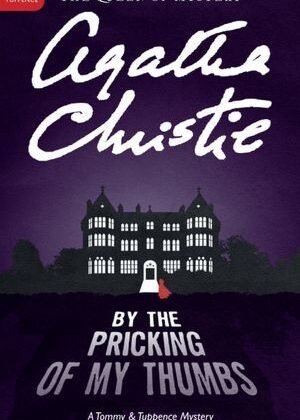
Tommy and Tuppence are well into middle age here, but still have a wonderful relationship. Tommy’s crotchety old aunt dies, but before she does Tuppence meets another woman at the same nursing home who says a few mysterious things that unnerve her. When the lady goes missing, Tuppence sets off to find her, ostensibly to return a painting.
The mystery is a bit convoluted but enjoyable and wraps everything up in the end well. I love that Tuppence is still willing to go on an adventure and that Tommy supports her. I may have to give in soon and get BritBox so I can watch the new Agatha Christie's Tommy & Tuppence series....
I don't know who told me that Mary Westmacott was the name Agatha Christie wrote her romances under, but I wish they hadn't. Granted, The Rose and the Yew Tree isn't a mystery, even if we do get a murder, but it isn't a stereotypical romance either. Most of the story takes place in a small town in Southern England during the run up to the General Election of 1945. Christie does a great job of developing the characters and commenting on the politics of the era.
Our narrator, who doesn't even get a mention in the blurb, is Hugh Norreys, a World War II veteran who was invalided due to a car accident. He has moved in with his brother and sister-in-law and is mostly feeling sorry for himself until he is distracted by his lovely neighbor, Isabella Charteris, and war hero turned politician, John Gabriel. Hughes status as an invalid stuck in a chair means others have a...
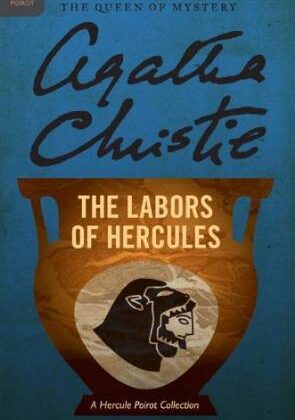
Poirot has a friend over one evening and the topic of names comes up. The man points out that Hercule Poirot is hardly a Hercules. This gets Poirot to thinking and he decides to prove that he is indeed able to live up to the name by solving twelve cases to rival the Twelve Labors of Hercules. The rest of the book is a collection of short stories featuring cases that connect with each of the Labors. Yes, some of the cases are a stretch, but I enjoyed it.
I won't go into detail about the stories. Like most collections, some are better than others. I've read them before, but only remembered a couple of the solutions. Poirot is Poirot, quirky, overbearing, vain, but his caring side comes through in several of these.
I listened to the audio and Hugh Fraser does a fabulous job as always. It did make me think I should go back and read about Hercules,...
I love that Miss Marple is bored on her vacation at the Golden Palm resort on St Honoré in the West Indies. The weather is always the same, lovely and warm, and the nothing interesting ever happens. She spends most of her time knitting and observing those around her. She also ends up listening to a lot of her fellow guest, Major Palgrave's, stories. When the major ends up dead, apparently of natural causes, Miss Marple is sure that his death was a murder and connected to a story he told her. She puts on her little old lady act and starts investigating.
She does rope in an assistant, Mr. Rafiel, a grouchy, wealthy elderly man in a wheelchair. He's really a great character and I love how he and Miss Marple work together - both older and underestimated, but with their own outlooks and resources. We've got a nice batch of varied suspects and a lot of undercurrents of...
I thoroughly enjoyed Mrs. McGinty's Dead. This time around Superintendent Spence brings Poirot a case. A man has been convicted of Mrs. McGinty's murder based on Spence's investigations, but Spence is convince the man is not guilty. Poirot heads to the small town of Broadhinny to investigate. He stays in a poorly run guest house, which leads to several entertaining moments. We know how much Poirot loves comfort and good food, neither of which he gets here. Ariadne Oliver is also in town, working with a young playwright to adapt one of her books for the stage. Ariadne just makes me smile. She's the opposite of Poirot and yet they get along well. I love how Ariadne talks about her fictional detective, giving us a bit of insight into how Christie feels about Poirot.
The plot was put together well, of course. The killer has to be one of the village residents, but Mrs. McGinty herself is rather uninteresting. Poirot,...
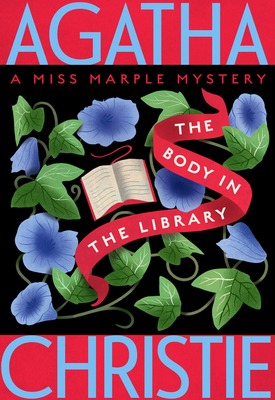
Our story opens with Mrs. Dolly Bantry being woken up by a maid and told there's a dead body in the library. She, in turn, wakes her husband, Colonel Arthur Bantry, who takes a bit of convincing before he will go down and check for himself. Sure enough, there's a dead girl in the library, a stranger wearing a rather cheap dancing dress. Mrs. Bantry immediately calls Ms. Marple and states if there has to be a murder in her house, she intends to enjoy it. The two women end up heading to a nearby hotel, where one of the staff has disappeared.
I enjoy Miss Marple. She's so observant and maybe a bit cynical. She allows people who don't know her well, to believe she's just a harmless, quiet older village lady when she is really quite shrewd and intelligent. She sees everything and bides her time, asking seemingly innocent questions and making seemingly absurd comparisons until she has...